Yes, foreigners can start a business in Vietnam in many sectors. The mistake is treating that yes as the whole answer.
The practical question is not only “Can I open a company?” It is: “Can I legally conduct this exact activity, in this location, with this ownership structure, using this capital path, and start operating without a missing approval stopping the business later?”
Vietnam market entry is best handled as a decision sequence.
The short answer
A foreign founder usually needs to check six gates before treating Vietnam setup as a real plan:
- What business activity will the company actually conduct?
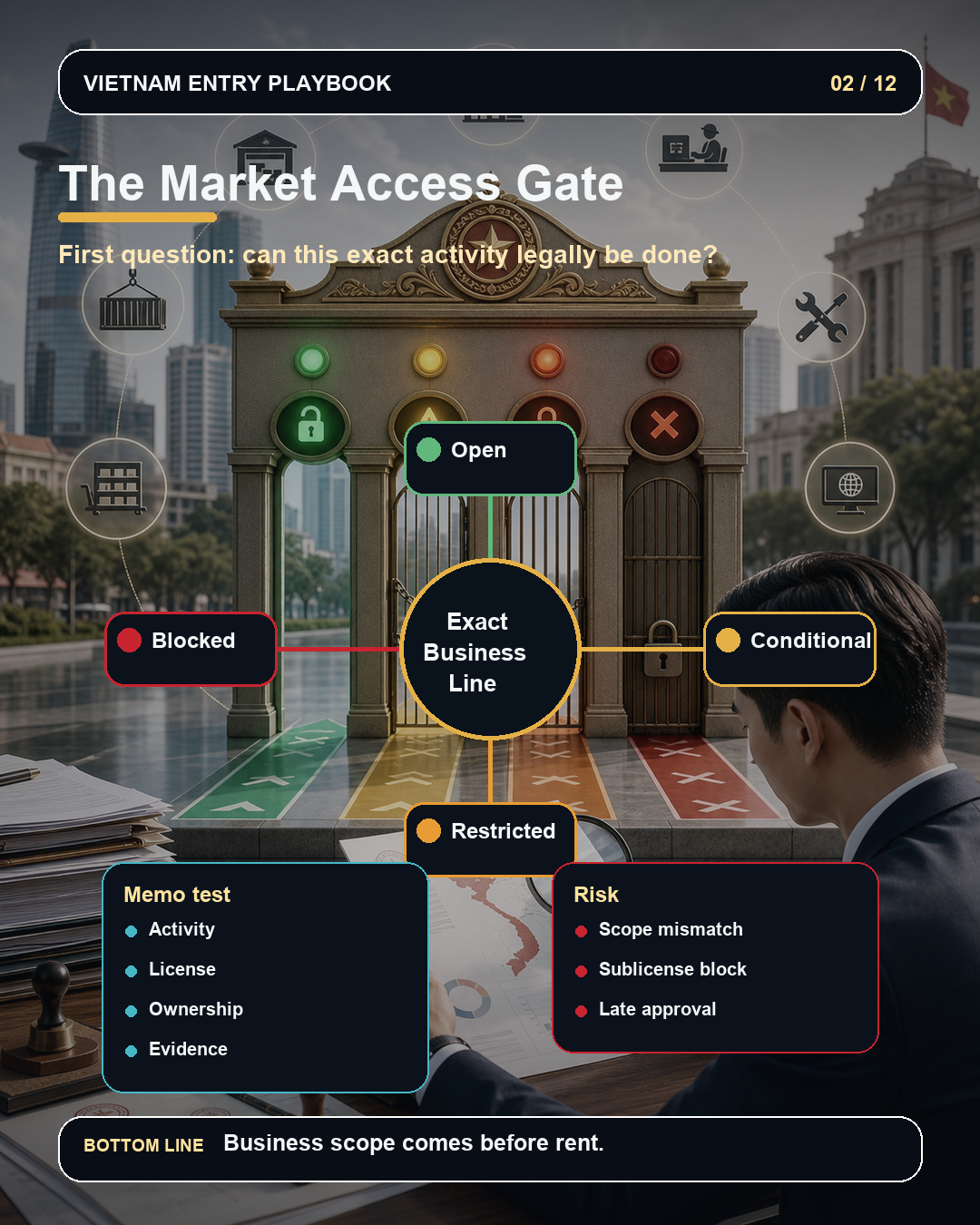
- Is that activity open, conditional, restricted, or prohibited for foreign investors?
- Is the better route a new company, share purchase, asset deal, business cooperation contract, or representative office?
- Will the project need an Investment Registration Certificate, Enterprise Registration Certificate, sector license, fire approval, environmental approval, or other local confirmation?
- Does the site, factory, office, land, or lease support the licensed activity?
- How will capital enter, be documented, used, reported, and eventually remitted?
That is why the setup process should not begin with forms. It should begin with activity definition.
Why the business line matters
Vietnam uses a market-access logic where foreign investors may receive domestic-investor treatment unless a sector is restricted, prohibited, or controlled by another law or treaty route.
That sounds simple until the business model has several activities inside it. A trading company may also provide e-commerce, warehousing, logistics, distribution, marketing, consulting, or after-sales support. A cafe may also involve alcohol, franchising, imported food, employment, leases, fire safety, signage, and local operating permissions.
If the activity is described too broadly, the approval path becomes unclear. If it is described too narrowly, the company may not be licensed for the work it actually does.
The clean move is to list the revenue activities in plain English before speaking in license codes.
New company is not always the first answer
Foreign founders often assume a new company is the default. Sometimes it is. But it is not the only route.
Entry can involve establishing a new economic organization, buying shares or capital in an existing company, buying assets, signing a business cooperation contract, or using a representative office for non-revenue activity.
The right route depends on speed, control, licenses, land, existing contracts, tax history, liabilities, partner trust, and whether the target activity is already approved somewhere else.
If you are buying into an existing company, the target’s business lines, foreign ownership position, land-use rights, liabilities, tax profile, labor obligations, and sector permissions matter just as much as the purchase price.
The common sequencing mistake
The most expensive mistake is signing before sequencing.
Founders sign a lease before checking whether the premises fit the activity. They wire money before the capital route is clear. They rely on an agent before understanding which approvals need independent confirmation. They incorporate before the operating model is specific.
The safer sequence is:
- Define the real activity.
- Screen foreign-investor access and ownership conditions.
- Choose the entry route.
- Confirm location and property fit.
- Map approval steps and specialist responsibilities.
- Plan capital contribution, banking, tax, and operating control.
- Start setup only after the decision gates are visible.
What to ask before you start
Use these questions before the first serious meeting:
- What exactly will customers pay for?
- Will the company import, export, distribute, manufacture, consult, advertise, operate premises, hire staff, or handle regulated goods?
- Which activity creates the highest approval risk?
- Does the site need fire, environmental, construction, food, alcohol, education, health, logistics, or sector-specific review?
- Will capital come as charter capital, shareholder loan, third-party loan, retained earnings, or staged project funding?
- Who is confirming the legal route, the tax position, the bank process, and the operating license path?
This is not legal advice. It is a practical entry screen. Vietnamese counsel, tax advisers, banks, and local authorities should confirm the final route before action.
The operator’s view
Starting a company is the visible part. Operating without daily confusion is the harder part.
The first 100 days should include reporting rhythm, cash control, role ownership, partner follow-up, document discipline, approval tracking, supplier checks, and a way for the owner to see problems before they become expensive.
If you want help pressure-testing the first route, send Les the activity, target location, current stage, and the decision you are trying to make next through WhatsApp, WeChat, or Zalo.